Auto electronics
Informationalized Solution
R&D tools
Marketing

With the development of intelligent vehicles (ADAS, Telematics, Infotainment, Cloud Services), the amount of on-board code has grown exponentially, the automation of code static analysis is imperative, and people's requirements for functional safety are becoming increasingly strict, in line with industry coding Specifications are the basic requirements for on-board code.
The American company -- Perforce (PRQA) is a recognized industry leader and pioneer in the field of embedded static analysis. With more than 30 years of software development and testing experience, it is a founding member and the most influential member of the MISRA coding committee, and responsible for the development of functional safety relevant standards. It participated in the writing of C ++ 14 coding guidelines, and formulated the AUTOSAR test plan.
As a well-known automatic code static analysis tool in the field, Perforce's Helix QAC can support MISRA C / C ++, AUTOSAR C ++, CERT C / C ++, CWE C / C ++, HICPP, JSF AV C ++ coding standards, its accurate diagnostic messages and powerful software lifecycle management platform are trusted by more than 3,000 OEMs and suppliers worldwide.
Shanghai PoleLink Information, as a Perforce partner, will provide professional static code testing solutions for Chinese customers.
Helix QAC Features
Helix QAC is a recognized industry pioneer in the field of static analysis, designed to help developers and testers implement efficient and automated static testing during Coding phase, discover potential code defects, measure code quality, reduce development time, and reduce development costs. Helix QAC consists of 3 parts:
Helix QAC / C ++ Static Analyzer Scale to millions of lines of code and perform static analysis at high speed;
Compliance Modules Optional components, in conjunction with the static analyzer to achieve code compliance testing;
Helix QAC Dashboard Full life cycle software development management.
1、Code Static Analysis
Helix QAC uses a unique deep data flow analysis engine to simulate code runtime mechanism to detect dangerous code structures in C / C ++ which will reduce code reusability, cause functional safety issues and Cyber Security vulnerabilities, maximizing code detection coverage rate and minimizing the rate of false negatives.
Helix QAC currently provides up to 4,107 diagnostic messages, including 2156 C and 1951 C ++ messages, which means more comprehensive and accurate coverage of coding specifications, because each diagnostic message corresponds to a specific coding rule, this can effectively diagnose problems with pointer operations, type conversions, overflow / zero division, undefined behavior, data flow, etc., and provide online help. Development engineers can modify source code in real time based on online help.
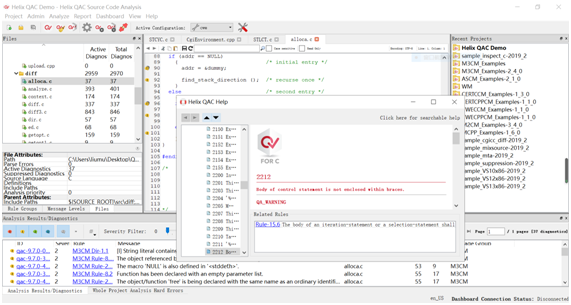
Figure 1. Helix QAC GUI
2、 Metrics
Metrics are measurements of some quantifiable attributes of the source code. Each metric reflects the quality of the code from different perspectives, such as complexity, readability, residual bugs, and testability. Helix QAC provides 118 function-based and file-based metrics, including 65 for C and 53 for C ++, providing a strong basis for companies to develop metrics standards, control metrics values, and control code quality.
3、 Compliance Modules
Helix QAC identifies MISRA violations with greater accuracy than other tools. And it prioritizes violations based on severity, so you fix the most important issues first.So, you’ll be able to improve code quality. Plus, you’ll be able to track and report on ISO26262 compliance.
1)MISRA C 2004、MISRA C 2012、MISRA C++ 2008 The ideal coding specification for embedded systems to prevent incorrect coding that can cause functional safety issues and cyber security vulnerabilities.
2)AUTOSAR C++ 14 Provides effective guidance for writing safety and mission-critical embedded systems using modern C ++ language.
3)CERT C/C++ Community driven effort to provide rules and recommendations to “eliminate insecure coding practices and undefined behaviours that can lead to exploitable vulnerabilities”.
4)CWE C/C++ Serve as a common language for describing software security weaknesses in architecture, design, or code.
Helix QAC is based on the good execution and coverage of the above coding standards, helping major global automakers, component suppliers and other industries such as aviation, military, medical and other fields to improve the code quality and achieve best practices in related industry standards.
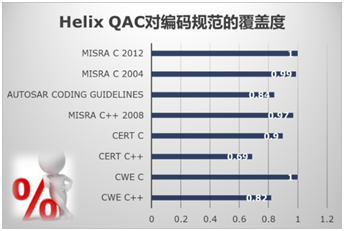
Figure 2 Coding Standards Coverage
4、 Helix QAC Dashboard
Helix QAC Dashboard is a web-based project quality management platform that can realize project information sharing for remote teams. Core developers, development managers, and senior managers can view source diagnostic messages, perform baseline / version management, add modification comments, and locate problem source code using heat map quickly, focus on code quality trends, set project permissions, view code compliance, customize reports, etc, presenting customers with a broader quality management concept.
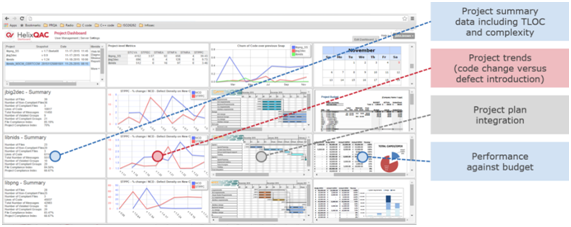
Figure 3 Customized Helix QAC Dashboard
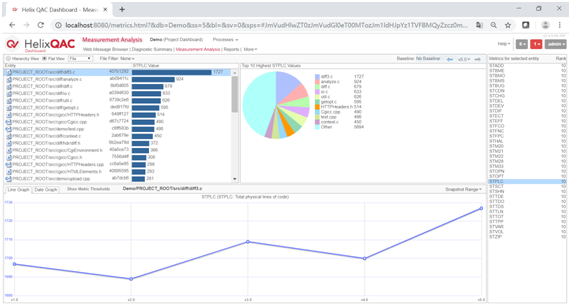
Figure 4 Metrics Tend Observation
5、 Integration Environments
1) IDE:Microsoft Visual Studio、Eclipse
2) CI:Jenkins、Jira,etc
6、 OS
1) Windows
2) Linux
7、 Diversity Reports
Rule Compliance Report Contains data on violations of rules that are specified in a Helix QAC project’s Rule Configuration File.
Code Review Report Summarizes metrics and messages from files, functions and classes. It can also display some code visualizations, includes, calls, relations and function structure. It provides a broad overview of the code.
Metrics Report Generates an XML file that you can use as a source of metrics data for
your own further examination.
Suppression Report Provides information on message diagnostics that have been suppressed during analysis.
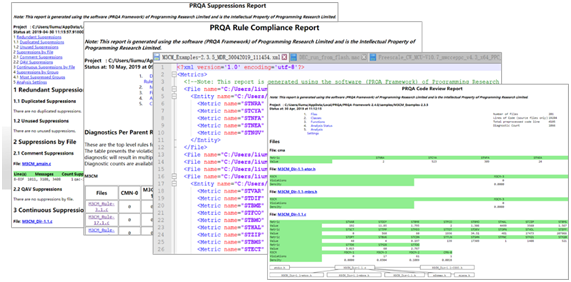
Figure 5 Helix QAC Reports
Independently Certified
Helix QAC is certified by SGS-TÜV SAAR and can be used for the development of safety-related software. It complies with IEC 61508 (SIL4), ISO 26262 (ASIL D), EN 50128 (SW-SIL4), IEC 60880 and IEC 62304 (Software Safety Class C) Standards that help customers complete product certification in less time.
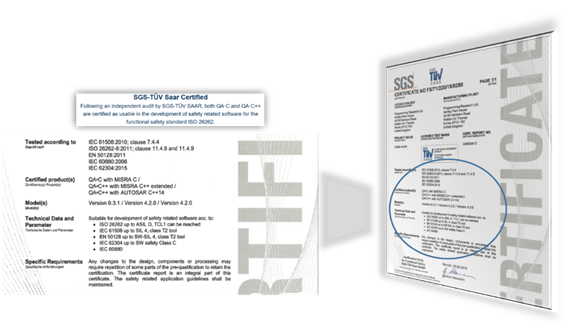
Figure 6 certificate
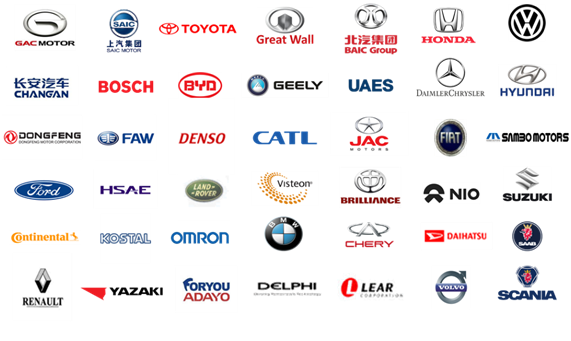
Trusted by Automotive Industry Leaders




© 2022 Shanghai PoleLink Information ICP-Licence:沪ICP备14018904号-1